
The Cameras were on: How a lie gave me purpose
Chapter One: The Day I Found My Purpose
August 3, 2022, is the day my life split in half.
Before that day, I was trying to survive inside supportive housing. It was not perfect, but it was supposed to be a place where a person could rebuild. That was the idea, anyway. Housing. Stability. A chance to breathe.
Instead, I found out how fast a system built to help people can turn against one person when the wrong employee decides to lie.
That day, a Pine Street Inn employee named Nate “Ricky” Rickerson came to my apartment door. What followed became the event my website is based on, and honestly, the event that gave me purpose.
He claimed I shouted racist threats.
I did not.
That is the cleanest way to say it.
No dramatic buildup. No fancy wording. No “misunderstanding.” No “he said, she said.” I did not say what they claimed I said.
What Pine Street Inn did not know at the time was that I had cameras in my apartment. Not one blurry camera in a corner. Six indoor 4K cameras, recording twenty-four hours a day, seven days a week. I had them because I already knew something was wrong. I already felt the pattern. The pressure. The little games. The kind of behavior people use when they think no one will ever be able to prove it.
Those cameras changed everything.
They did not just record my apartment. They recorded the truth.
And the truth was simple: the accusation was false.
But when people in authority get caught lying, they do not always apologize. Sometimes they double down. Sometimes they change the subject. Sometimes they attack the evidence. That is what happened to me.
Once they realized I had cameras, the issue suddenly became whether I was “allowed” to record. That was the first big red flag. The accusation itself started getting buried under a new argument. They wanted the cameras to be the problem, not the lie.
But I was recording inside my own apartment.
That apartment was my home. The cameras were inside. They were not hidden in someone else’s office. They were not spying on private staff conversations. They were in my unit, protecting me from exactly the kind of thing that happened.
And still, the machine moved forward.
The lie did not just sit there harmlessly. It followed me. It became part of how I was treated. It helped turn me into a target. It contributed to me losing my housing, losing my belongings, and being pushed into a fight I never asked for.
People love to talk about homelessness like it appears out of nowhere. Like someone just wakes up one day and decides to fall apart. That is not always how it happens. Sometimes homelessness is manufactured. Sometimes it is the end result of paperwork, retaliation, silence, and people abusing just enough power to ruin someone who was already vulnerable.
I lost more than a place to sleep.
I lost property. I lost stability. I lost trust in organizations that advertise compassion while protecting themselves first. I lost the illusion that supportive housing automatically means support.
But I gained something too.
Purpose.
That part matters, because I do not want this story to sound like a sad little victim story. I am not writing this because I want pity. Pity is useless. Pity does not expose a lie. Pity does not hold anyone accountable. Pity does not help the next person who gets railroaded by a system that expects poor, disabled, or homeless people to have no receipts.
I had receipts.
I had video.
I had emails.
I had names.
I had dates.
And I had the one thing they clearly did not expect me to have: the patience to build a public record.
That is what my website became. It was not born from boredom or revenge. It was born from the realization that if I did not document what happened, the official version would become the only version. And the official version was garbage.
So I started building.
I built the site because I wanted the truth in one place. I built it because I knew how systems survive: they count on exhaustion. They count on people giving up. They count on the victim being too broke, too tired, too traumatized, too disorganized, or too scared to keep going.
I was all of those things at different times.
But I kept going anyway.
August 3, 2022, did not make me who I am. I was already me. I was already stubborn. I was already technical. I was already the kind of person who saves files, checks logs, records details, and notices when stories do not line up.
What that day did was aim me.
It gave me a target.
Not a person. Not even one organization. The target became something bigger: the culture of silence inside human services when the people being harmed are the same people the system claims to protect.
That is the part I could not unsee.
Once you see it, you cannot go back. Once you realize that the public version of “help” can be very different from what happens behind closed doors, you start noticing the pattern everywhere. The language is soft. The branding is beautiful. The grants are real. The salaries are real. The tax filings are real. The suffering is real too.
But the accountability?
That part is usually missing.
I became inconvenient because I refused to disappear quietly.
I became a problem because I could prove things.
I became louder because silence had already cost me too much.
This chapter starts with August 3, 2022, because that was the day the mask slipped. That was the day I understood that my story was not just about me. It was about what happens when a person with evidence refuses to let an institution write the ending.
They thought they were dealing with someone they could label, isolate, and throw away.
They were wrong.
They gave me a reason.
And once a person like me gets a reason, good luck putting that back in the box.

Chapter Two: The Part They Did Not Plan For
The lie was only the beginning.
That is the part people do not always understand. A false accusation by itself is bad enough. It can damage your name, your safety, your housing, your relationships, and your future. But the real damage comes after, when the people responsible for handling the truth decide they would rather protect the lie.
That is when you find out what kind of system you are really living inside.
After August 3, 2022, I expected the obvious thing to happen. I had cameras. I had proof. I had a way to show that the accusation against me was false. In a normal world, that should matter.
In a normal world, someone would say, “We reviewed the evidence. This did not happen the way it was reported.”
But supportive housing was not operating like a normal world.
It was operating like a machine.
And machines do not apologize. Machines protect themselves.
Once Pine Street Inn knew there were cameras inside my apartment, the story started shifting. Suddenly, the focus was not the accusation anymore. Suddenly, the concern became the fact that I had recordings. The evidence became the problem. Not the lie. Not the employee. Not the damage done to me. The cameras.
That told me almost everything I needed to know.
Because when someone is falsely accused and has proof, honest people look at the proof. Dishonest people attack the proof.
My cameras were inside my own apartment. They were there for my protection. They recorded my space, my life, and my side of reality. I did not install them because I wanted drama. I installed them because I could already feel the walls closing in. I knew something was wrong long before the big lie happened.
There are signs before things explode.
People act differently around you. Conversations get weird. Staff members become colder. You start feeling like decisions about your life are being made in rooms you are not allowed to enter. You hear one thing to your face and see another thing happen on paper. You start documenting because your gut tells you that one day you are going to need every single receipt.
My gut was right.
The cameras were not just electronics. They became witnesses.
They showed the difference between what happened and what was claimed. They showed that I was not crazy for feeling targeted. They showed that the truth still exists even when people in authority pretend not to see it.
But truth does not automatically save you.
That was one of the hardest lessons.
I used to think proof was enough. I thought if you could prove you were telling the truth, the adults in the room would step in and correct the record. That is a comforting idea. It is also wrong.
Proof only matters when someone is willing to act on it.
Without accountability, proof just becomes something people avoid.
And that is exactly what happened.
The situation kept moving against me. The accusation stayed in the air like poison. The relationship with Pine Street Inn got worse. The people who were supposed to provide support became part of the threat. I was not being helped. I was being managed.
There is a big difference.
Support means someone is trying to keep you stable.
Management means someone is trying to control the paperwork until you are no longer their problem.
I became their problem.
Not because I was dangerous. Not because I had done what they claimed. I became a problem because I would not accept the false version of events. I would not nod along. I would not let them quietly label me and move on.
That made me inconvenient.
And inconvenient people get punished in systems like that.
The pressure built until I lost my housing. People can dress that up in official language all they want, but that is what happened. A false accusation turned into a chain reaction, and that chain reaction helped push me out of the place I was supposed to be safe.
Losing housing is not just losing four walls.
It is losing your base of operations. It is losing the place where your tools are, your documents are, your clothes are, your memories are, your backups are, your entire life is stacked in boxes and drawers and hard drives. When you are a technical person, your equipment is not just stuff. It is your ability to function. It is how you document, repair, build, communicate, and survive.
I lost more than a home.
I lost stability.
I lost property.
I lost time.
I lost the basic feeling that tomorrow would be predictable.
And once you lose that, every simple thing gets harder. Charging a phone becomes a task. Keeping documents safe becomes a task. Sleeping becomes a gamble. Eating becomes logistics. Defending yourself while homeless is like trying to build a server rack in a thunderstorm with one screwdriver and everybody yelling at you.
That is not a metaphor. That is basically the vibe.
But even then, I kept collecting evidence.
Emails. Dates. Names. Screenshots. Recordings. Patterns.
The more I looked, the more I realized the August 2022 event was not just one bad employee having one bad moment. It was part of a larger culture where vulnerable people can be harmed, labeled, ignored, and pushed out while the organization keeps smiling in public.
That bothered me more than anything.
Because I know I am not the only one.
I may be louder than some. I may be more stubborn. I may be better with computers, records, domains, and public documentation. But I am not the only person who has been treated like a disposable problem by people being paid to provide support.
That realization changed the mission.
At first, I wanted to clear my name.
Then I wanted accountability.
Then I wanted a public record.
Eventually, I wanted something bigger: I wanted people to see the gap between the marketing and the reality.
That is where the website came from.
The website was not some random rage project. It was a response to being cornered. It was what happened when the normal channels failed. When internal complaints went nowhere. When the people with power had no interest in correcting the record. When the truth needed a place to live where they could not bury it in a file cabinet.
So I gave it a place.
I started laying out the story piece by piece. I posted what happened. I organized the names. I preserved the timeline. I connected the emails. I showed the pattern.
I was not trying to sound polished. I was trying to be clear.
There is a difference.
Polished is what organizations do when they write mission statements. Clear is what a person does when they are trying to survive the consequences of someone else’s lie.
The more I built, the more purpose I found.
Purpose does not always arrive like a lightning bolt. Sometimes it comes from pure stubbornness. Sometimes it comes from being so disgusted by what happened that quitting feels worse than continuing. Sometimes purpose is just the sentence you keep repeating to yourself:
No. You do not get to do this and walk away clean.
That sentence carried me through a lot.
It carried me through the anger.
It carried me through the humiliation.
It carried me through the days when I was tired of explaining the same thing over and over to people who should have understood it the first time.
It carried me through the realization that truth moves slowly when nobody powerful benefits from it.
But I kept moving too.
That is the part they did not plan for.
They may have expected fear. They may have expected silence. They may have expected me to get overwhelmed and disappear into homelessness like so many people do.
But they did not expect the cameras.
They did not expect the records.
They did not expect the websites.
They did not expect me to understand technology well enough to build a public archive around their behavior.
And they definitely did not expect me to turn the worst thing they did to me into the thing that gave me direction.
I did not ask for this fight.
I did not wake up one day hoping to make Pine Street Inn part of my life story.
But they put themselves there.
Chapter one was the lie.
Chapter two was learning that the cover-up, the silence, and the retaliation could be even more revealing than the lie itself.
Because one bad act can show you a person.
The response to that bad act shows you the system.
Chapter Three: Manufactured Homelessness
People like to talk about homelessness like it is a personal failure.
That is one of the biggest lies society tells itself.
It is easier that way. Cleaner. Safer. If homelessness is always caused by drugs, laziness, bad decisions, or some mysterious character flaw, then nobody has to look too closely at the systems that push people there. Nobody has to ask who signed the paperwork. Nobody has to ask who ignored the warning signs. Nobody has to ask who benefited from moving one more “difficult” person out of the way.
But I did not fall into homelessness.
I was pushed.
That is the truth of it.
The August 2022 accusation did not stay trapped in that one day. It spread. A lie like that does not need to be proven to do damage. It only needs to be repeated in the right room, written in the right file, or whispered to the right supervisor. Once that happens, the accusation becomes part of how people see you. It becomes a shadow walking next to you.
And when you are already inside supportive housing, that shadow can become a weapon.
I watched the system turn colder around me. The support became thinner. The conversations became more loaded. The tone changed. It was not about helping me stay housed anymore. It was about managing me as a liability.
That word matters.
Liability.
Organizations do not treat liabilities like people. They treat them like problems to be reduced, contained, transferred, or erased. The language may stay polite, but the purpose changes. Suddenly, your humanity is less important than their exposure.
That is when I understood something ugly: once I had proof, I became more dangerous to them than the lie was to me.
The cameras should have protected me. The evidence should have cleared the record. Instead, the evidence made them nervous. It showed that their version of events could be challenged. It showed that I was not just going to sit there and accept whatever story they wanted to attach to my name.
So the pressure kept building.
Eventually, I lost the apartment.
People can dress it up however they want. They can hide behind policy, procedure, case notes, housing rules, and all the soft language these agencies use when they want something to sound neutral. But at the center of it was a simple fact: a false accusation helped start a chain of events that cost me my home.
And when I lost that home, I lost more than a mailing address.
I lost my foundation.
I lost the place where my life was plugged in.
That may sound dramatic to someone who has never had to rebuild from nothing, but anyone who has been there knows exactly what I mean. A home is not just a bed and a roof. It is where your documents live. It is where your tools live. It is where your clothes, drives, electronics, notes, memories, and half-finished projects sit waiting for you to come back.
For me, it was also where my equipment was.
I am a technical person. Electronics, computers, networking, servers, cameras, storage, repair work — that is my world. My gear was not just clutter. It was how I functioned. It was how I documented my life. It was how I protected myself. It was how I worked through problems when everything else felt unstable.
Losing that kind of property is not like losing a couch.
It is like losing pieces of your brain that happened to be made out of metal, plastic, copper, and hard drives.
The dollar amount was huge. Around eighty thousand dollars in belongings, equipment, and personal property. But even that number does not fully explain it. Money is only one layer. Some things cannot be replaced because they are connected to time. Projects. Records. Setup. Familiar tools. Systems you built with your own hands because buying a simple version was either too expensive or too boring.
Losing it was brutal.
But what really made it worse was knowing it did not have to happen.
This was not a natural disaster. This was not a fire. This was not some random accident where everybody did their best and life just went sideways.
This was the result of people making choices.
That is the part I will never let get buried.
There were people involved. There were names. There were emails. There were decisions. There were chances to stop it. There were chances to look at the evidence, correct the lie, and prevent the damage from spreading.
They did not do that.
Instead, I ended up outside.
Homelessness strips life down in a way most people cannot understand unless they have lived it. Everything becomes harder. Basic tasks turn into operations. You do not just “charge your phone.” You find a place where nobody bothers you, where the outlet works, where you can sit long enough, where your stuff will not get stolen, and where you do not have to explain why you exist.
You do not just “sleep.”
You calculate risk.
You listen.
You keep one eye open.
You think about your backpack like it is an organ.
You plan your day around bathrooms, outlets, weather, food, storage, and the mood of strangers.
And while all of that is happening, the world keeps expecting you to solve paperwork problems like you are sitting at a desk with coffee and a printer.
That is the comedy of it, if you want to call it comedy. The system can help make you homeless, then demand that you respond to the consequences with perfect organization.
Miss an email, and it is your fault.
Lose a document, and it is your fault.
Show anger, and it is your fault.
Get exhausted, and it is your fault.
That is how they win. They create conditions that would break almost anyone, then blame the person for cracking under the weight.
But I did not crack the way they needed me to.
I got angry, yes. I got tired. I got disgusted. Some days I was running on pure spite and gas station snacks, which is not exactly a wellness plan. But I did not let go of the record.
The record became my anchor.
Every email mattered. Every date mattered. Every name mattered. Every screenshot, message, recording, and document had a place in the larger picture.
Because I knew the system would try to make the story smaller.
They would want it to sound like one tenant with one complaint. One incident. One misunderstanding. One housing issue. One difficult person. One unfortunate outcome.
No.
It was not one thing.
It was a chain.
A false accusation.
Evidence ignored.
Retaliation.
Housing lost.
Property lost.
Homelessness created.
Public accountability avoided.
That chain is the story.
And the more I lived through the aftermath, the more I realized the word “supportive” can be used like camouflage. Supportive housing sounds safe. It sounds compassionate. It sounds like trained people helping vulnerable people stabilize.
Sometimes that happens.
But sometimes the word “supportive” is just paint on the outside of a machine that still knows how to grind people up.
That is the part nobody wants on the brochure.
Nobody wants to advertise the staff member who lies. Nobody wants to advertise the supervisor who protects the wrong person. Nobody wants to advertise the retaliation, the intimidation, the quiet file-building, the way residents learn to stop complaining because complaining makes life worse.
Nobody wants to say, “We help people, unless they become inconvenient.”
But that is what I experienced.
I became inconvenient because I had proof.
I became inconvenient because I would not shut up.
I became inconvenient because I knew how to build websites, preserve evidence, and explain what happened without needing permission from the people who harmed me.
That is when my homelessness became something else too.
It became research.
Not in the academic sense. I was not sitting in a library writing footnotes and sipping tea like some tweed-jacket wizard. I was living the thing. I was watching how agencies talk about people versus how they treat them. I was learning how quickly compassion disappears when accountability enters the room.
I saw how the language works.
“Safety concerns.”
“Policy violations.”
“Resident behavior.”
“Appropriate channels.”
“Case management.”
“Due process.”
Some of those phrases may sound reasonable by themselves. But in the wrong hands, they become fog machines. They make simple things look complicated. They turn harm into procedure. They turn retaliation into documentation.
Meanwhile, the person being harmed is expected to keep proving they are human.
That was the real insult.
Not just losing the apartment. Not just losing my belongings. Not even sleeping outside.
The insult was being treated like the truth only mattered if someone with a title approved it.
I did not accept that.
The website became my way of refusing.
It became my office when I did not have one. My archive when they wanted confusion. My voice when the official channels gave me nothing but delay, denial, and carefully worded nonsense.
Every page was a brick.
Every document was a brick.
Every name, date, and event was another brick.
I was not building something pretty. I was building something that could stand.
Because if they could manufacture homelessness, I could manufacture a public record.
And that public record became harder to ignore than I was.
That was the turning point of Chapter Three.
I stopped thinking of myself as someone simply trying to get back what I lost. I still wanted justice. I still wanted accountability. I still wanted someone to answer for the damage. But the mission had grown.
Now it was about showing the machinery.
It was about proving that homelessness is not always a mystery, and it is not always self-inflicted.
Sometimes homelessness has a paper trail.
Sometimes it has witnesses.
Sometimes it has camera footage.
Sometimes it has employees, supervisors, lawyers, agencies, and public money all tangled together in one ugly knot.
And sometimes the person they thought they could throw away knows how to document every inch of the rope.
I was homeless.
But I was not gone.
That made all the difference.
Chapter Four: The Safety Net Had Holes
Pine Street Inn showed me how supportive housing could fail.
Cambridge showed me what happens after it fails.
That was the next lesson.
After losing housing, I did not step into some clean, organized safety net where trained people recognized what had happened and helped me rebuild. That would have made too much sense. Instead, I entered the next layer of the same machine: shelters, warming centers, case workers, public agencies, nonprofit contracts, and a whole lot of people using soft language to describe hard neglect.
I had already been harmed by one system that was supposed to help me. Then I was forced to depend on another system that talked the same way, used the same kind of paperwork, and had the same strange allergy to accountability.
That was when I started realizing the problem was bigger than Pine Street Inn.
Pine Street Inn was the spark. The August 2022 lie was the match. The eviction, the loss, the homelessness — all of that lit the fire.
But once I was outside, I started seeing the whole building burning.
The public thinks shelters are simple. You are homeless, so you go to a shelter. Problem solved, right?
No.
That is cartoon logic.
Real homelessness is not a neat little flowchart. It is a grind. It is a maze where every door has rules, every rule has exceptions, every exception depends on who is working that night, and every staff member seems to have a different version of what “help” means.
At the Cambridge Warming Center, I expected basic safety.
Not luxury. Not comfort. Not some spa day for the tragically displaced. I expected the bare minimum: a place to stay warm, a place where staff were awake, a place where problems were handled before they became disasters, and a place where people were not punished for asking reasonable questions.
That should not have been a big ask.
Apparently, it was.
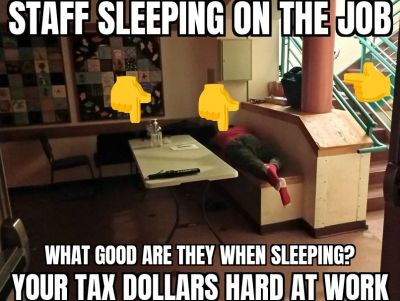
What I found instead was a system that often felt less like support and more like containment. Staff were not always alert. De-escalation was weak or nonexistent. Complaints did not feel safe. If you spoke up, you could become the problem. If you pointed out something wrong, the reaction was not always, “Thank you, we will fix that.” Sometimes the reaction was colder than that. Sometimes it was retaliation wearing a nametag.
That is a special kind of ugly.
When someone is homeless, they are already exposed. They already have fewer options. They already have to calculate where to sleep, where to charge a phone, where to store belongings, where to use the bathroom, where to exist without being treated like a stain on the sidewalk.
So when staff inside the emergency system start acting like bullies, it hits differently.
They are not just being rude.
They are abusing leverage.
Because where are you supposed to go?
That is the quiet threat behind so much of this. Nobody has to say it out loud. The whole system says it for them.
Complain if you want.
You still need somewhere to sleep tonight.
That is how control works in places like that. It does not always look like someone screaming in your face. Sometimes it looks like staff sharing your business. Sometimes it looks like being singled out. Sometimes it looks like people ignoring obvious problems until the person complaining becomes easier to blame than the problem itself.
I saw staff behavior that would have gotten people fired in a normal workplace. I saw poor supervision. I saw unsafe conditions. I saw the kind of casual disrespect that homeless people are expected to swallow because the world has already decided they should be grateful for anything.
That word — grateful — gets used like a leash.
You should be grateful for a cot.
You should be grateful for warmth.
You should be grateful for a sandwich.
You should be grateful someone opened the door at all.
Fine. Gratitude is one thing. But gratitude does not mean silence. It does not mean accepting neglect. It does not mean pretending staff misconduct is compassion because the building has a nonprofit logo on it.
People confuse “better than freezing outside” with “good enough.”
Those are not the same.
A system can be necessary and still be broken.
A service can save someone from the cold and still mistreat them once they are inside.
A shelter can be better than the street and still be unsafe, humiliating, chaotic, and poorly run.
That is the part people do not want to hear.
They want homelessness to be a simple story with simple roles. The nonprofit helps. The city funds. The staff serve. The homeless person receives. Everybody claps politely at the grant meeting.
But that is the brochure version.
I was living the back-room version.
One of the worst parts was losing more of what little I had left. My laptop and storage devices were stolen while I was asleep. That was not just property. That was my lifeline. My laptop was my office, my filing cabinet, my communication system, my evidence room, my workstation, and sometimes my only real connection to the world I was trying to fight my way back into.
When you have already lost a home and a huge amount of property, every remaining item becomes more important. A laptop is not just a laptop. A hard drive is not just a hard drive. Those things carry documents, projects, proof, memories, passwords, records, and pieces of yourself you are trying not to lose.
So when they disappeared, it felt like being robbed twice.
Once by the circumstances that made me homeless.
Then again by the environment I was forced to survive in.
And the insult did not stop there.
For about a month, I was mocked over it.
That still sticks with me.
Not because I cannot handle insults. I have been through enough that a few cheap shots are not exactly going to fold me like wet cardboard. But because of what it revealed.
A person in crisis lost tools they needed to function, document, and rebuild — and the response was mockery.
That tells you something.
It tells you what kind of culture has been allowed to grow inside places where the public assumes compassion is automatic.
Compassion is not automatic.
A mission statement does not make a person decent.
A city contract does not make a program humane.
A nonprofit status does not bless every action inside the building.
I learned that the hard way.
At some point, I stopped being surprised and started taking notes.
That was another shift in me. Before, I was mainly documenting what happened with Pine Street Inn. The original lie. The cameras. The retaliation. The housing loss. The emails. The legal threats. The paper trail.
But the shelter and warming center experience expanded the map.
Now I was looking at the whole ecosystem.
Who runs these places?
Who funds them?
Who supervises the supervisors?
Who investigates complaints?
Who decides whether a program is succeeding?
What happens when the numbers look good on paper but the people inside are being treated like garbage?
Those questions mattered.
Because the more I watched, the more obvious it became that public money can flow through a system while accountability barely drips.
The funding exists.
The contracts exist.
The titles exist.
The committees exist.
The reports exist.
The people still suffer.
That is not a small problem. That is not a personality conflict. That is not one bad night at one warming center.
That is structural.
And once you see it, you cannot unsee it.
I started noticing how language gets used to protect the system from the people inside it. Everything becomes “policy.” Everything becomes “procedure.” Everything becomes “safety.” Everything becomes “appropriate channels.”
But appropriate for who?
Because if the channels do not fix anything, they are not channels. They are drains.
They take your complaint, your energy, your time, your hope, and your documentation, and they disappear it into the floor.
That is why the public record became even more important.
I had already learned that private complaints could be ignored. I had already learned that internal processes often protect the institution first. I had already learned that the person telling the truth can be treated like the threat.
So I kept building outside their walls.
Websites. Timelines. Emails. Names. Documents. Screenshots. Receipts.
I was not doing it because I wanted attention. I was doing it because attention is sometimes the only thing that forces movement. These systems are very comfortable operating in shadows. They prefer closed meetings, private files, internal reviews, and quiet damage.
Public documentation changes the temperature.
It makes the room hotter.
Good.
Some rooms need to get hot.
The more I documented, the clearer the mission became. This was no longer only about what Pine Street Inn did to me. It was about the way human services can become a protected industry where vulnerable people are managed, labeled, shuffled, and silenced.
That does not mean every worker is bad.
That would be too easy, and it would be false.
There are people in human services who care. There are people doing impossible jobs for not enough money, dealing with chaos, trauma, addiction, violence, paperwork, burnout, and leadership that may or may not have their backs.
I know that.
But good workers do not erase bad systems.
And good intentions do not cancel out real harm.
That is where people get defensive. They hear criticism of a shelter, a nonprofit, or supportive housing, and they act like the only choices are “everything is perfect” or “everyone involved is evil.”
That is toddler math.
The truth is messier.
A system can contain good people and still protect bad behavior.
A program can help some people and still destroy others.
An agency can receive praise in public and still retaliate in private.
That is the truth I kept running into.
And it made me angrier, because I knew how easily the people inside these systems get dismissed. Homeless people are not considered reliable narrators of their own lives. That is the dirty little advantage these agencies have.
If a housed professional says something, it becomes documentation.
If a homeless person says something, it becomes an allegation.
If staff write it down, it becomes a record.
If you write it down, it becomes “your side.”
That imbalance is massive.
I felt it every day.
So I decided to become harder to dismiss.
Not calmer. Not quieter. Not more polite for the comfort of people who had already shown me what their comfort was worth.
Harder to dismiss.
That meant being specific.
Dates.
Names.
Locations.
Patterns.
Documents.
Screenshots.
Video.
Emails.
Not vibes. Not rumors. Not “trust me, bro.” Evidence.
That became my weapon, my shield, and my weird little emotional support goblin.
Because when everything else was unstable, the record stayed solid.
The Cambridge experience taught me that the safety net had holes big enough for people to fall through and then be blamed for hitting the ground.
It taught me that homelessness is not just the absence of housing. It is also the presence of systems that can make recovery harder than survival.
It taught me that some organizations are very good at sounding compassionate while being allergic to accountability.
Most of all, it taught me that my story was not an isolated disaster.
It was a case study.
Pine Street Inn was not the whole book.
Bay Cove, the warming center, Cambridge, the shelters, the contracts, the complaints, the silence — all of it became part of the same larger story.
The story of what happens when the people with the least power are expected to trust systems that answer mostly to themselves.
I did not trust them anymore.
I trusted evidence.
I trusted patterns.
I trusted the archive I was building one ugly brick at a time.
And somewhere in that mess, under the exhaustion, the anger, the loss, and the absurdity, my purpose sharpened again.
I was not just trying to survive homelessness.
I was documenting how it was maintained.
That was Chapter Four.
The part where the safety net did not catch me.
The part where I looked down and saw the holes.
The part where I realized somebody needed to start pointing at them.
Chapter Five: The Chain of Command
Systems do not fail by magic.
That is one thing I want people to understand before they read any further. When a person gets harmed inside supportive housing, it is easy for outsiders to say, “The system failed.”
That sounds serious, but it is also vague.
Too vague.
A system is not a ghost. A system is people. People with names. People with job titles. People with email addresses. People who answer phones, attend meetings, write reports, review complaints, speak to lawyers, supervise staff, sign off on decisions, and choose whether to help or avoid helping.
So when I say Pine Street Inn failed me, I do not mean some invisible machine floating in the clouds.
I mean there was a chain of command.
And I tried to use it.
After the August 2022 event involving Nate “Ricky” Rickerson, I did what a person is supposed to do when something serious happens. I tried to report it. I tried to get someone above him to look at what happened. I tried to explain that the accusation against me was false, that I had cameras inside my apartment, and that the record did not match the story being used against me.
That should have mattered.
Instead, I learned that the chain of command is only useful when the people in it are willing to act.
At Pine Street Inn, the names started to matter quickly.
Nate “Ricky” Rickerson was the person at the center of the August 2022 event. He was connected to the accusation that became the foundation of so much damage afterward. I have said it before, and I will say it plainly here: I did not shout racist threats. I did not do what was claimed.
The cameras inside my apartment were not a side issue.
They were the evidence.
That evidence should have changed the direction of everything.
Instead, the reaction around me changed.
Once Pine Street Inn knew I had cameras inside my apartment, the focus seemed to shift. Suddenly, the issue was not only what had been claimed about me. Suddenly, the fact that I had recordings became a problem of its own.
That told me a lot.
Because honest people look at evidence.
Dishonest systems attack the existence of evidence.
My cameras were inside my own apartment. They were there to protect me. They recorded my space, my doorway, and my side of reality. They showed what happened and what did not happen. They should have protected me from a false version of events.
But proof only matters when someone is willing to act on it.
Andrea Quintyne was one of the names connected to the reporting chain from that day. From my understanding and experience, she was part of the supervisory structure that received or handled what was being claimed about me. Her role matters because the accusation did not remain just a hallway moment or a doorway moment. It moved upward. It became something the organization treated as real enough to affect my life.
That is where responsibility spreads.
Once a false accusation travels upward, every person who receives it has a choice.
They can examine it.
They can question it.
They can ask for evidence.
They can compare the claim against the recordings.
They can slow the machine down before it harms someone.
Or they can let it keep moving.
In my case, it kept moving.
Lyndia Downie was another major name in the chain. She represented, to me, the kind of higher-level authority that should have been able to stop the damage, review the evidence, and address the staff behavior that started the chain reaction.
I reached out.
I tried to explain what happened.
I tried to get the people above the situation to understand that this was not a minor disagreement or a personality conflict.
This was a false accusation with real consequences.
It affected my housing.
It affected my safety.
It affected my reputation.
It affected my future.
And still, help did not come in the way it should have.
Matthew Pyne was another name I came to associate with the leadership structure and the failure to correct the record. When you deal with organizations like this, the names blur together after a while because everyone seems to have just enough authority to pass the issue along, but not enough urgency to fix it.
That is one of the tricks of bureaucracy.
Every person can act like the problem belongs to someone else.
The staff member says it is up to the supervisor.
The supervisor says it is up to management.
Management says it is policy.
The lawyer says it is legal.
The organization says there is a process.
The process says nothing useful.
Meanwhile, your life is burning.
I spoke up because I still believed, at first, that someone in the chain would realize how serious it was. I thought there had to be one person with enough sense to say, “Hold on. If he has recordings, we need to review what actually happened.”
But the more I pushed, the more I saw the pattern.
Nobody seemed eager to touch the truth.
They were much more comfortable managing me than correcting the damage.
That is the difference between leadership and damage control.
Leadership asks, “What happened?”
Damage control asks, “How do we contain this?”
I kept running into damage control.
When I complained, I did not feel heard. I felt processed. I felt like my words were being absorbed into a system designed to drain urgency out of them. It was like throwing evidence into a swamp and then being told to respect the swamp’s timeline.
Cute little bureaucratic swamp. Very professional. Very useless.
The situation was not complicated at the core.
A staff member made a serious accusation.
I denied it.
I had cameras.
The cameras mattered.
The claim should have been reviewed against the evidence.
The record should have been corrected.
The staff involved should have been held accountable.
The damage should have been stopped before it spread.
That is not rocket science. That is basic adult behavior with a clipboard.
Instead, the accusation stayed alive. The pressure increased. The relationship between me and Pine Street Inn deteriorated. The situation moved toward housing loss instead of truth.
That is why I started naming names.
Not because I enjoy it.
Not because I woke up one day and thought, “You know what sounds fun? A lifetime hobby of documenting nonprofit dysfunction.”
No. That is a terrible hobby. Zero stars. Would not recommend. The merch is bad and the emotional Wi-Fi keeps dropping.
I started naming names because vague complaints are easy to ignore.
“The system hurt me” can be dismissed.
“Staff retaliated against me” can be minimized.
“I was falsely accused” can be treated like just another dispute.
But when you attach names, dates, emails, recordings, and decisions, the shape of the truth changes.
It becomes harder to bury.
That is what accountability requires.
People in power love privacy when privacy protects them. They love internal channels when internal channels keep the public from seeing the pattern. They love saying, “We take this seriously,” while making sure the seriousness never leaves the building.
I learned not to trust those phrases.
“We take this seriously” means nothing without action.
“We will look into it” means nothing without results.
“Please use the appropriate channels” means nothing when the channels lead nowhere.
“Safety is our priority” means nothing when the person reporting the false accusation gets treated like the threat.
That was my experience again and again.
At Pine Street Inn, I tried to report the false accusation and the retaliation that followed. I tried to explain the evidence. I tried to make people understand that this was not just a complaint about tone, personality, or a bad interaction.
This was a serious event that helped destroy my housing stability.
This was the beginning of a chain reaction.
And the people in the chain had chances to stop it.
Nate “Ricky” Rickerson mattered because the August 2022 accusation mattered.
Andrea Quintyne mattered because the accusation moved into the supervisory structure.
Lyndia Downie mattered because leadership had the power, or should have had the power, to address what was happening.
Matthew Pyne mattered because higher-level leadership cannot claim distance from harm once the harm has been reported upward.
Phil Qualo mattered because his name became part of the wider Pine Street Inn record connected to my experience.
Dana Hill mattered because the communications and decisions around my case did not exist in a vacuum.
Meghan Minehan mattered because every leadership name attached to the organization became part of the accountability chain once the evidence and complaints were known.
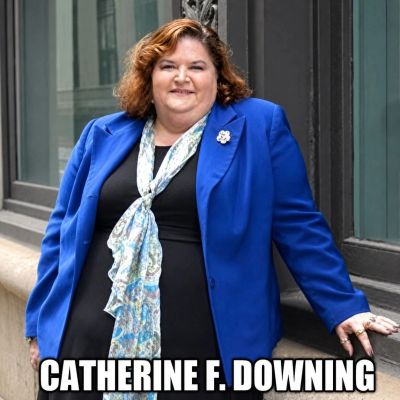
Catherine F. Downing mattered because legal pressure and organizational response became part of the story, not separate from it.
Not every person had the same role.
Not every person did the same thing.
But each name became part of the larger record because each one represented a point where the situation could have been addressed, corrected, investigated, escalated, or at least treated with basic seriousness.
That is the part people miss.
A chain of command is not just a chart.
It is a series of opportunities.
Every link in that chain had a chance to stop the damage from moving forward.
Every link had a chance to say, “Wait. This man says he has cameras. Review the evidence.”
Every link had a chance to prevent a false accusation from becoming a life-altering event.
Most of those chances were wasted.
The public imagines a complaint rises upward until it reaches someone responsible enough to fix it. But sometimes the complaint rises upward only to disappear into a bigger office with better wording.
The higher it goes, the smoother the language gets.
At the bottom, it is fear, accusations, retaliation, housing loss, property loss, and homelessness.
At the top, it becomes “concerns,” “communication,” “review,” “process,” “safety,” and “next steps.”
That translation is where the truth gets murdered.
One of the reasons I built my websites was to stop that translation.
I wanted the public to see the raw version.
Not the grant-report version.
Not the polished nonprofit version.
Not the lawyer-approved version.
The version where a man had cameras in his apartment, was falsely accused anyway, lost housing, lost property, became homeless, reported the truth, named the people involved, and watched one person after another avoid doing the simple, decent thing.
That simple thing was this:
Look at the evidence.
Correct the record.
Hold the responsible people accountable.
Help repair the damage.
That is not complicated.
It only becomes complicated when people are trying not to do it.
I know some people will not like this chapter. They will say naming names is too aggressive. They will say it makes people uncomfortable. They will say it is not productive.
Good.
It should be uncomfortable.
There is nothing comfortable about losing your housing because a lie was allowed to grow legs.
There is nothing comfortable about watching leadership avoid the evidence.
There is nothing comfortable about being treated like the problem because you refused to accept a false version of events.
There is nothing comfortable about being delayed, ignored, threatened, and passed around by people whose job titles imply responsibility.
Comfort is not the goal here.
Clarity is.
And clarity requires names.
The legal threats mattered because instead of fixing the truth, the response became pressure.
The leadership mattered because silence from above still has consequences below.
The staff mattered because the original accusation did not appear from nowhere.
The chain mattered because the damage traveled through it.
Every name mattered because every name marked a door I knocked on.
Most of those doors did not open the way they should have.
That is the story of Chapter Five.
Not one bad employee.
Not one bad day.
Not one misunderstanding.
A chain of command.
A chain of avoidance.
A chain of people who had chances to help before the damage got worse.
And me, standing there with evidence, asking the same basic question over and over:
Who in this chain is actually responsible?
The answer I kept getting was silence, delay, deflection, or paperwork.
So I made my own answer.
I built the record.
I named the names.
And I kept going.

Chapter Six: Paper Weapons
The next phase did not come with shouting.
It came on letterhead.
And sometimes, it came by town constable.
That is how organizations like Pine Street Inn can make harm look official. They do not have to stand in front of you and admit what they are doing. They can send a lawyer. They can send a notice. They can have legal threats served to you by someone with an official role, turning paperwork into an event.
That changes the feeling of it.
A letter in the mail is one thing.
Being served by a town constable is another.
That is not just paperwork anymore. That is intimidation with shoes on.
It is a person showing up to put the threat directly into your hands. It makes the message physical. It makes the power imbalance impossible to ignore. It tells you that the organization is not just ignoring you. It is now using formal legal channels to push against you.
They can turn fear into paperwork.
Then they can send someone to deliver it.
That was the part I had to learn fast.
After the August 2022 event, after the false accusation, after the cameras, after I tried to get the people above the situation to look at the truth, Pine Street Inn did not respond by correcting the record. They did not slow down and say, “Wait, we need to examine the evidence before we destroy this man’s housing stability.”
Instead, the legal pressure started.
Downing Van Dyke became part of the story.
Catherine F. Downing became part of the story.
The law firm was not some separate thing floating in the distance. It was the legal arm of the pressure I was feeling from Pine Street Inn. It was the professional-looking version of the same problem: the organization had a story it wanted to push, and instead of confronting the truth, it used legal paperwork to make that story dangerous for me.
That is what a notice can do.
A notice does not have to prove the truth to scare you.
It only has to threaten consequences.
The Notice to Quit hit like that.
There it was, in formal language, served through an official channel, treating me like the problem. Not like a person with evidence. Not like a tenant saying, “This accusation is false and I can prove it.” Not like a vulnerable resident inside supportive housing who was begging the chain of command to stop a lie from becoming a disaster.
No.
The paper version made me sound like the threat.
That is one of the dirtiest tricks in this whole story.
The person reporting harm becomes the danger.
The person with cameras becomes the concern.
The person asking for accountability becomes the disruption.
The person trying to clear his name becomes the tenant they want out.
That is how the frame gets flipped.
And once the frame gets flipped, the paperwork starts doing the dirty work.
A Notice to Quit is not just a letter. It is a weapon pointed at your housing. It tells you, in the cold language of legal procedure, that your place to live is now at risk. It changes the air in the room. It turns your apartment from a home into a countdown.
Every sound feels different after that.
Every knock.
Every email.
Every piece of mail.
Every interaction with staff.
You start living inside the threat.
That is what people who have never been through housing instability may not understand. Legal notices are not just documents you “respond to.” They become part of your nervous system. They sit in your head. They follow you around. They make sleep harder. They make concentration harder. They make every ordinary problem feel like it could be the thing that finally knocks the whole structure down.
And all of this was happening while I was still trying to say the same basic thing:
I did not do what they claimed.
I had cameras.
Review the evidence.
Correct the record.
Instead, the paperwork kept coming.
And each time it came, it seemed to grow.
That became one of the most disturbing parts.
The first lie was not enough.
Every new legal threat seemed to arrive with more fabrications added in, like they were stacking extra accusations on top of the original one just in case the first story could not stand by itself. Instead of correcting the false claim, the paperwork expanded the narrative. More claims. More framing. More reasons to make me look like the problem.
That is how a lie becomes a file.
One false accusation turns into a notice.
The notice turns into a pattern.
The pattern turns into a legal narrative.
And the legal narrative keeps collecting new pieces, whether they are true or not, until the person being targeted has to fight not just the original lie, but the pile of junk built around it.
That is why I call them paper weapons.
Because that is how they functioned in my life.
They were not neutral. They were not harmless. They were not just “the process.” They were pressure. They were intimidation. They were a way to make me feel that if I kept pushing, if I kept speaking, if I kept documenting, if I kept refusing to accept the false version of events, the consequences would keep escalating.
And they did escalate.
The legal threats did not only stay focused on housing. They also moved toward my speech, my documentation, and eventually my website.
That part matters.
Because by then, I was not just privately complaining anymore. I was building a public record. I was naming names. I was showing the pattern. I was putting the evidence where people outside the organization could see it.
That is when the pressure changed flavor.
Before, the message felt like: your housing is at risk.
Then it became: your voice is the problem too.
That is where I saw the connection clearly.
Pine Street Inn did not want to deal with the evidence inside the building, and they did not want the evidence outside the building either.
Inside, I was being managed.
Outside, I was being threatened.
That is not accountability.
That is containment.
When I received more legal threats from Downing Van Dyke, especially served through formal channels, I saw them as an extension of the same cover-up. They were not rescinding the threats. They were not correcting the accusations. From my view, they were doubling down. They were taking the position that Pine Street Inn could keep its version, keep its pressure, and then come after the website too.
And with each new threat, the story seemed to get padded.
That is the word that fits: padded.
As if the original accusation needed stuffing around it.
As if one false claim was too thin, so they had to bulk it up with more claims, more language, more legal weight, and more scary formatting.
That is when the First Amendment part became real to me.
I was not publishing fiction.
I was not inventing some wild fantasy because I was bored.
The website was not a hobby.
It was a defense mechanism.
It was a record.
It was the result of every internal channel failing to fix what should have been fixed at the beginning.
When an organization refuses to correct the truth privately, public documentation becomes necessary.
That is how I saw it.
Downing Van Dyke’s letters did not make me feel like justice was happening. They made me feel like the organization had chosen legal force over moral responsibility.
That is a very different thing.
Legal pressure can be dressed up as policy enforcement. It can be dressed up as risk management. It can be dressed up as “protecting staff,” “protecting property,” or “following procedure.”
But from where I stood, the pattern was obvious.
A false accusation was made.
I had evidence.
I pushed for accountability.
The organization did not fix it.
Then the lawyers started sending threats.
And those threats were not always just sent quietly. They were served.
That matters.
Because being served by a town constable makes the threat feel official before the truth has even been dealt with. It gives the accusation a costume of authority. It turns their version into something stamped, delivered, and performed.
Then, with each new document, the costume got bigger.
More allegations.
More framing.
More invented weight.
More effort to make me look like the danger instead of the person trying to expose what happened.
That is not complicated.
It only becomes complicated when someone needs to make the victim look like the danger.
The legal documents also had another effect: they hardened my resolve.
That may sound backwards, but it is true.
Fear can shut people down. That is what threats are designed to do. They are supposed to make you hesitate. They are supposed to make you ask, “Can I afford to keep going?” They are supposed to make you imagine worst-case scenarios until silence starts to look like safety.
For a while, they worked in that sense.
I was stressed. I was angry. I was exhausted. I understood that lawyers can make your life miserable even when you are telling the truth. I understood that the legal system is not some magical truth machine. It is expensive, slow, intimidating, and often easier for organizations than for individuals.
But then something clicked.
If they were willing to use legal pressure against me while avoiding the evidence, that pressure itself became evidence.
The threats became part of the story.
The new fabrications became part of the pattern.
The notices became part of the timeline.
The town constable became part of the memory of how those threats arrived.
The paperwork became another layer of the public record.
They thought they were building a case against me.
I saw them building a case against themselves.
Because every letter raised the same question:
Why was this much force being used against the person asking them to review the evidence?
And why did the story need more and more added to it each time?
That question never went away.
The more they threatened, the more important the website became.
The more they tried to frame me as the problem, the more important it became to show the original event.
The more they acted like my speech was the issue, the more obvious it became that my speech had hit something sensitive.
That is the thing about sunlight.
People who have nothing to hide may still dislike it, but people protecting a rotten story react differently. They do not just disagree. They try to block the window.
That is what the legal attacks felt like.
They were trying to block the window.
They wanted the matter contained inside documents, private channels, legal phrases, and official narratives. They wanted the public to see a tenant issue, a safety issue, a policy issue, anything except what I was trying to show:
A false accusation.
Ignored evidence.
A leadership failure.
Retaliation.
Housing loss.
Property loss.
Legal intimidation.
Added fabrications.
And a public record that refused to die.
Later, the trespass notice added another layer.
By that point, it was not just about the apartment. It was not just about the original accusation. The paperwork had expanded into telling me where I could not go, what properties I was forbidden from entering, and how far Pine Street Inn was willing to go to separate itself from me physically while still refusing to separate itself from the lie.
That is how it felt.
They did not repair the damage.
They drew lines around their property.
They did not clear my name.
They made me the one to keep away.
That is another kind of framing. It sends a message without saying the quiet part out loud.
We are the institution.
You are the threat.
Stay away.
But the problem for them was simple: I did not need to be inside their buildings to keep documenting what happened.
That is the part they never seemed to understand.
You can trespass a body.
You cannot trespass the truth.
You cannot ban a timeline from existing.
You cannot serve a notice to a screenshot.
You cannot evict a recording.
You cannot intimidate a fact into becoming false.
That is why I kept going.
The legal attacks were supposed to make me smaller.
They made the story bigger.
They proved that the response to my evidence was not accountability. It was pressure. It was paper. It was threat after threat wrapped in professional formatting and delivered like that made it respectable.
But legal formatting does not make something moral.
A signature from a lawyer does not make a false narrative true.
A Notice to Quit does not erase camera footage.
A trespass notice does not erase the chain of command.
A threat against a website does not erase the reason the website exists.
Being served by a town constable does not magically turn intimidation into justice.
And adding new fabrications to later threats does not strengthen the truth.
It only shows how weak the original lie was.
That is the heart of Chapter Six.
Pine Street Inn had a choice.
They could have reviewed the evidence.
They could have corrected the record.
They could have held staff accountable.
They could have treated me like a person who had been harmed instead of a problem to be contained.
Instead, they brought in Downing Van Dyke.
They escalated through legal pressure.
They used notices, threats, service, added claims, and formal documents to push the same message:
Stop.
Back down.
Go away.
Accept our version.
I did not.
Because by then, I understood something very clearly.
If I backed down, their paperwork would become the story.
If I stayed quiet, their version would become the record.
If I let the threats scare me into silence, the truth would be trapped inside my head while their documents sat there looking official.
I could not allow that.
So I did the only thing I knew how to do.
I preserved everything.
I read every line.
I saved every document.
I compared each new threat to the last.
I watched the accusations grow.
I connected every threat to the timeline.
I turned their paper weapons into exhibits.
And I kept building the record.
Chapter Six is not about law in the noble sense.
It is about how law can be used as a shield for an institution and a sword against the person it harmed.
It is about how a nonprofit that claims to serve vulnerable people can hide behind lawyers when one of those vulnerable people starts proving too much.
It is about how a false accusation became a legal campaign.
It is about how new fabrications were stacked onto old ones until the paperwork became its own kind of evidence.
And it is about how I learned that sometimes the scariest threats are also the most useful receipts.
They sent paper.
They sent a constable.
They added more lies.
I kept receipts.
That was the fight.

To Contact or Media Requests:
Supportive Housing wasn't so supportive, was it!?
This is my purpose and I do it for free.